




A hot air gun is one of the few tools that shows up in a waterproofing crew's van, a packaging warehouse, a phone repair shop and a plumber's toolkit — for completely different reasons. The tool is simple (controlled hot air, adjustable temperature), but the range of jobs it handles surprises most first-time buyers.
Here are the eight main hot air gun uses we see across the UAE, what each one demands from the tool, and which class of gun fits each job.
Table of Contents
Toggle1. Plastic and HDPE Welding
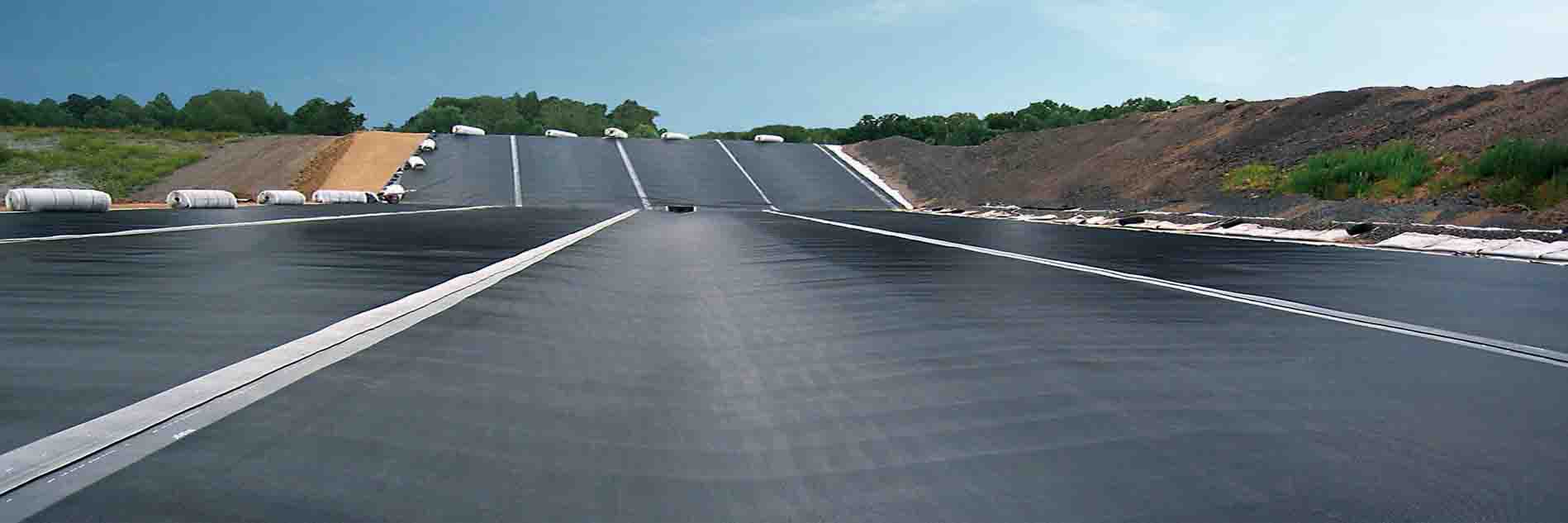
The flagship professional use. With a speed-welding or slot nozzle, a hot air gun fuses thermoplastics — PVC and TPO roofing membranes, HDPE sheets and liner patches, PP fabrications, tarpaulins and pond liner repairs. Success depends entirely on temperature stability: each plastic has a narrow welding window, which is why welding is the territory of stepless-control tools like the Weldy HT1600 rather than fixed-setting heat guns. For HDPE liner work specifically, the gun handles tacking, patches and details, while long seams go to wedge machines — the division of labour explained in our wedge welder guide.
2. Shrink Wrapping and Packing
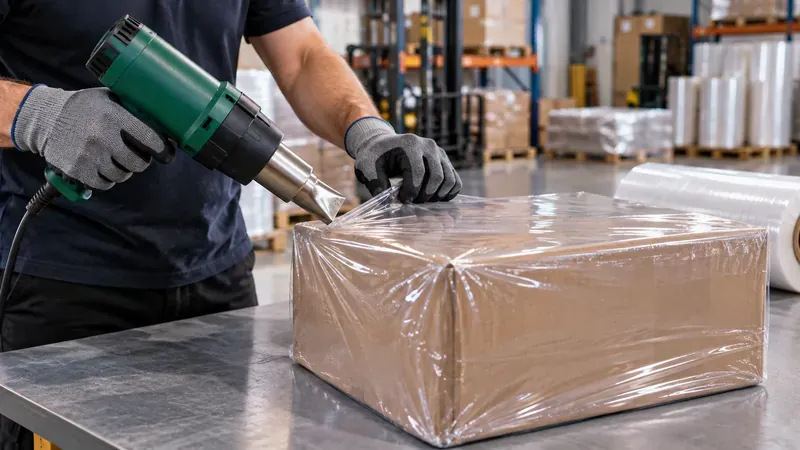
Warehouses and export packers across Dubai use hot air for shrink films: pallet wrap, machinery packaging, product bundling and protective covers. The film shrinks tight and uniform when heat is applied evenly over area — which is why packing operations favour high-airflow tools like the 3400W Weldy HT3400 with a wide slot nozzle: what takes many passes with a small gun becomes one sweep.
3. Mobile Phone and Electronics Repair
Repair technicians use controlled hot air to soften display adhesives, lift screens and back glass, and release glued components without cracking them. Honest guidance here: for board-level SMD rework, a dedicated soldering hot-air station with fine nozzles is the right bench tool — a welding-class hot air gun is the choice when repair shops also handle housings, laminating and adhesive work where its power and durability pay off. Precise low-end temperature control (from 40°C) is what makes a professional gun usable near electronics at all.
4. Soldering and Desoldering
Beyond electronics: hot air soft-solders copper piping and sheet-metal seams, and desolders fittings during plumbing and HVAC repairs — flame-free, which matters in occupied buildings and near flammable materials. With reflector nozzles, heat wraps evenly around the pipe joint.
5. Shrinking Cable Sleeves and Heat-Shrink Tubing
Electricians and panel builders shrink insulation sleeves, cable markers and joint covers daily. Even, moderate heat prevents the classic failure — one side shrunk tight, the other loose. Dedicated shrinking kits with reflector nozzles make this a ten-second job per sleeve.
6. Drying, Curing and Accelerating
Hot air speeds up what time normally does: drying filler and putty between coats, curing adhesives, dehumidifying repair areas before bonding, and drying substrates on site so work continues instead of waiting. In production settings this is often the use that justifies the tool by itself.
7. Bending and Forming Plastics
Acrylic, PVC pipe and plastic sheet become workable when evenly heated along the bend line — sign makers, display fabricators and plumbers form angles and curves without cracking. Larger radii and thicker sections call for the higher heat coverage of the 3400W class.
8. Lifting, Removing and Activating
The utility drawer of uses: softening old membrane and adhesive for removal, lifting vinyl and protective films, loosening seized or corroded joints, activating heat-bond adhesives, and even lighting charcoal. Not glamorous — but the reason the gun leaves the van every single day.
Which Hot Air Gun for Which Use?
| Primary use | Recommended class |
|---|---|
| Welding, repairs, general trade work | Weldy HT1600 (1600W, 40–700°C) |
| Certified/documented welding, delicate low-temp work | Weldy HT1600 D (digital, presets) |
| Shrink wrapping, packing, forming, large-area drying | Weldy HT3400 (3400W, 320 l/min) |
Model-by-model comparison lives in our best hot air gun in UAE guide, and if you're still deciding between tool classes entirely, start with hot air gun vs heat gun. All three models plus nozzles and kits ship from Dubai stock — call +971 50 178 9490 and describe your main use; we'll match the tool and nozzles in one call.
FAQs — Hot Air Gun Uses
What is a hot air gun used for?
Professionally: welding thermoplastics (membranes, HDPE, PVC, PP), shrink wrapping and packing, shrinking cable sleeves, soldering copper, drying and curing adhesives, bending plastics, electronics disassembly, and removing old membranes and adhesives.
Can a hot air gun be used for HDPE welding?
Yes — with a welding nozzle and stable temperature control, hot air guns handle HDPE tacking, patches, repairs and detail welds. Long production seams on HDPE liners are run by wedge welding machines instead, with the gun covering everything the machine can't reach.
Can I use a hot air gun for mobile repairing?
For screen removal, adhesive softening and housing work, yes — the precise low-temperature end of a professional gun is what makes it safe near electronics. For fine board-level SMD soldering, a dedicated hot-air rework station with micro nozzles is the better bench tool.
Which hot air gun is best for shrink wrapping and packing?
The high-airflow 3400W class with a wide slot nozzle — large film areas shrink evenly in single passes, which is what packing throughput depends on.
Can a hot air gun replace a soldering iron?
For pipe and sheet-metal soft soldering, yes — hot air with a reflector nozzle heats the whole joint evenly and flame-free. For precision electronics soldering, the iron and rework station remain the right tools.
What temperature do common hot air gun tasks need?
Roughly: heat-shrink tubing 90–150°C, screen adhesives 80–120°C, shrink films 120–160°C, PVC welding 250–350°C, HDPE/PP welding 300–450°C — one reason stepless control across the full range matters.









 Pool Tiles


